Why healthcare is hard
Patients need answers now. Privacy can't bend.
Patient portals and public-sector platforms carry a high privacy bar and a high duty to respond. People expect to help themselves at any hour, and a delayed answer to a patient is more than an inconvenience. Self-service has to scale without ever putting sensitive data at risk. A generic chatbot script isn't built for that privacy bar; this agent is.

Across the journey
One agent across the healthcare and public journey.
01
Acquisition
The agent helps onboard patients and providers around the clock, answering setup and access questions in their own language before a human is needed.
02
Retention
Living Memory keeps patients and providers engaged by remembering each person across sessions, so nobody has to start over or re-explain themselves.
03
Expansion
The agent surfaces additional services a patient or provider may need and points them to the right next step the moment the signal appears.
04
Support
Patient self-service questions get resolved with a cited source, and anything sensitive or unclear hands off cleanly to the right person with full context.
Frameworks that matter here
Built for the privacy bar healthcare sets.
- GDPR
- EU data residency by default; patient PII filtered and tokenized at the gateway by the Privacy Vault.
- EU AI Act
- Per-decision audit trails and transparency built into the platform, not bolted on.
- Healthcare data rules
- The Privacy Vault tokenizes sensitive identifiers at the gateway, so patient data never reaches third-party generative model providers and stays inside EU data residency.
Healthcare in practice
“As a healthcare service prioritizing patient care and privacy, we chose UNLESS as the obvious solution. The impact was immediate: following a seamless integration, patient self-service surged within weeks.”
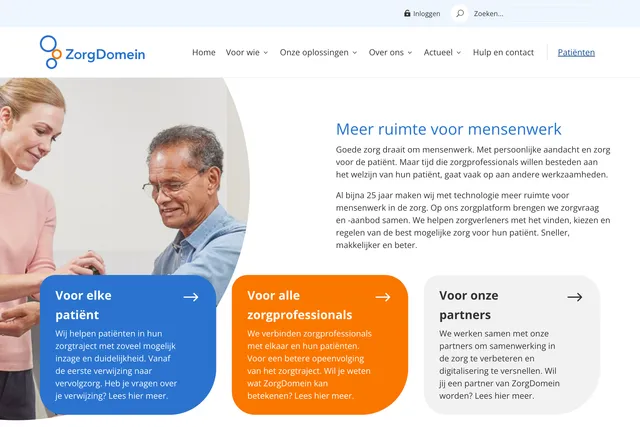
ZorgDomein is a leading digital healthcare platform in the Netherlands, connecting healthcare providers and patients. The patient portal now runs on the AI of UNLESS, with patient self-service surging within weeks of integration.
The numbers
What healthcare teams see.
- Ticket deflection rate
- 78%
- Resolved outside office hours
- 37%
- To first deployment
- 28 days
- Ticket drop at ZorgDomein
- 20%
Frequently asked questions
How does Unless protect patient data?
Does the agent give medical advice?
How does the agent meet the EU AI Act in a patient-facing setting?
Is Unless accessible for patients with disabilities?
Patients are not always our paying customers. Can the agent still help them?
How quickly can a patient get an answer?
Can we start small and expand across the organization later?
Want to be the next healthcare case study?
The pilot is a four-week deep dive into your numbers, your data, your stack - run on your own healthcare content.